Mattos Filho: 30 years building the next 30
In 1992, a group of lawyers who had worked together for over two decades founded Mattos Filho, Veiga Filho, Marrey Jr e Quiroga Advogados. Joined by 12 associates, they realized the idea of what was essentially a boutique law firm focused on four areas – tax law, capital markets, corporate law and real estate.
Yet from the very beginning, there was a commitment to a grander long-term vision. Mattos Filho quickly evolved into a full-service business model, forming new practices, expanding other areas and increasing our staff, to keep up with client needs and anticipate the latest market trends.
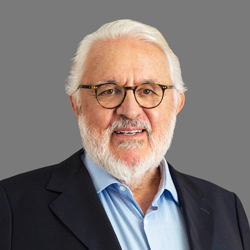
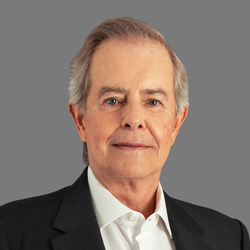
To tell the story of how everything came to be over the last three decades, our founding partners got together for a conversation. Mediated by Ive Lima, our director of Communication and Marketing, the partners discuss the ways in which legal practice has evolved, as well as the role of lawyers in facilitating business and acting as agents of transformation in society.
See the highlights of the conversation below, or watch the video in full.
Ive Lima: Mattos Filho’s story began in 1992 – with the firm mainly focused on tax, capital markets and real estate. Where did the idea to found the firm come from? What have the main challenges been throughout its history?
Ary Oswaldo Mattos Filho: The firm was born from the idea that a law firm should be able to sustain and perpetuate itself. More than a structure that shelters friends for a certain time, it should grow, establishing connections that remain over time. We never sought for the firm to be fixed with just four founding partners.
Roberto Quiroga: We started off with four business areas. Ary had left his role in the CVM [Brazilian Securities and Exchange Commission], so we were very strong in the financial markets. Marrey and I were very active in the tax area, and Otávio in the real estate area, and we had a small corporate law area. I like to joke that this initial strategy didn’t work out so well because we evolved and went on to become the firm we are today.
Otávio Uchôa da Veiga Filho: Our plan was to have other people join the firm and add to the work we started. To this day, one of our mottos is ‘open up opportunities for our professionals to grow’. Along the way, we have had some pretty striking examples of trainees becoming associates, before then going on to become partners. Quiroga is an example of this, although he worked with us as an intern before we all founded Mattos Filho. We faced constant challenges, especially in maintaining a united front among everyone who eventually joined the firm, although we always managed this challenge respectfully. New partners would come along, and a natural empathy would quickly develop.
Ive Lima: 30 years is a relatively short time, yet Mattos Filho has already managed to become one of the leading firms in Brazil and Latin America in this period. What was the secret to this success?
Roberto Quiroga: We were very strong on creating a collegial, respectful environment when we started the firm, and this has continued with the partners who joined later on. Another characteristic, without a doubt, was our professionals’ technical excellence. The third secret for this growth came from outside the firm: the growth of Brazil itself. Brazil and the legal market have grown significantly in these last 30 years – in terms of economic development and a more just and balanced society – and fortunately, we have grown together with it.
Otávio Uchôa da Veiga Filho: Another important characteristic was our ability to adapt. Many of the guidelines we put in place ended up being modified over time, though this didn’t scare us. Mattos Filho has always adapted itself to external conditions – over time, this pushed us to create new practice areas, promote associates to partners and bring in partners from other firms, always seeking to attract the best available professionals in the market.
Pedro Luciano Marrey Jr.: As we are a firm that provides services, our main asset is our people. We have always fought hard for our ideals to establish a culture focused on the collective. This has trickled down from the founding partners to other lawyers, forming the culture that exists at the firm today.
Ive Lima: What other political and economic events have taken place during the firm’s history that have also helped drive its growth?
Pedro Luciano Marrey Jr.: We were in the right place at the right time. The main external factor that really gave us a boost was the 1988 Federal Brazilian Constitution. From that point on, we essentially witnessed the design of a new country from a legal standpoint. We also had an active and important role in this matter – we were constantly going to Brasília to meet with congressmen, because they ultimately decided what would or would not be included in the Constitution.
Many work opportunities appeared with this new Constitution – especially in tax – as earlier provisions were challenged in regard to their compatibility with the Constitution. In 1992, Brazil opened to international trade, representing another important step that significantly changed the domestic market and increased competition. Many legal questions arose.
A third important issue in the 1990s was the question of privatization. This started with the privatization of [mining company] Vale do Rio Doce, which we worked on a lot. It was a massive operation, and we had to form different teams to be able to accomplish the task. Ultimately, we were successful.
Ive Lima: Such a journey would have undoubtedly brought about personal and professional challenges. Did you think that, at some point, the business might not work out?
Ary Oswaldo Mattos Filho: We learned to fix the plane mid-flight. We were never afraid to undertake new endeavors, expand existing areas and invest in the firm. This is a core characteristic – either you believe in what you are doing, or you start to doubt yourself and things don’t end up moving. Mattos Filho has never hesitated to take risks, but we have done so in a controlled manner – the result of the conversations we have always had.
Ive Lima: Do you think the way of practicing law has changed much in the last 30 years?
Pedro Luciano Marrey Jr.: Quite a lot! Because Brazil has changed, the clients have changed, and the economy has changed. When we started the firm, we didn’t talk about environmental law, for example; it was a subject that simply didn’t exist. Today, it is a very important topic. Back then, there was little talk of IPOs. Today, dozens of companies do this every year. Mergers and acquisitions happen more often, and the arrival of foreign capital – favored by the Brazilian economy and the value of the [American] dollar – contributes to foreign companies shifting their attention to Brazil, buying shares in Brazilian companies or even buying entire companies. This has required specialized professionals who know how to handle these kinds of transactions: going public, issuing notes, merger and acquisition agreements, and defending various interests. Lawyers need to know how to defend their clients. The practice of law has changed in that sense – in the past, you would assist your clients with a particular issue. Today, you accompany them throughout the whole process, through all their needs, for many years.
We have also learned how to establish client loyalty. Some have been with us for over 30 years, even since before we became Mattos Filho. So, we have had to keep learning how to practice law, relying on the collaboration of other partners and associates who are more specialized in certain areas, then coordinate all these fronts to be able to deliver a more efficient, appropriate
product.
Ive Lima: Throughout our growth, we have gone from being a firm focused on transactional areas to a completely full-service law firm with a very strong and renowned litigation practice. How did this transformation occur?
Roberto Quiroga: In 2009, we changed the firm’s governance model and the entire partner compensation system, which led to an important transformation in how we operate. We organized ourselves to offer our clients a complete portfolio of services. Strategically, we approached the right people for our team who could expand this area or create new opportunities. Only 15 years ago, we had almost nothing to do with litigation, but in 2021, our Litigation and Arbitration practice was our highest-earning practice. This shows that our strategy has been successful and has generated numerous internal opportunities.
Today, we are recognized as a Band 1 firm in many practice areas. We have been able to fill these gaps to provide better and more comprehensive service. Nowadays, when companies think of Mattos Filho, they see countless possibilities in terms of service in a way they did not see before. This is the result of our strategy and organization. Our brand is now very strong.
Our greatest evolution in these 30 years was that we effectively became a full-service firm. When a client first approaches our firm, they need not go anywhere else, as we can attend to all their needs.
Ive Lima: How do you evaluate Mattos Filho’s history? What do you expect from the firm during the next 30 years?
Pedro Luciano Marrey Jr.: The firm has brought us all so much joy. We have had setbacks, and of course, we are not perfect, but overall, we have grown: not only in terms of size but also as people. Back in the beginning, we understood that we should give back to society – and the best way to give back was using the power of law. We have been very active in relation to social initiatives; I think that was the most important thing. The firm is made up of people, and they need to be treated well. We want our professionals to be happy in their work, as we were when we first opened the firm.
Otávio Uchôa da Veiga Filho: The value that we have always put on people marks our work to this day, and I can only imagine it will continue so as it is part of the firm’s DNA. Despite this focus on individuals and people, the depersonalization of the firm has not happened spontaneously. Today, Mattos Filho functions independently of each of the founding and remaining partners. We are an institution. This spirit serves to perpetuate itself, and continues to fill us with joy and pride.
Ary Oswaldo Mattos Filho: This institutionalization and depersonalization were fundamental to ensure the organic growth of our firm. We are an absolutely democratic institution, as each partner has one vote. We are an association of common interests between partners, associates, interns and other professionals, all working for a common cause. We have managed to establish an environment in which people respect each other and find their main professional purpose.
Roberto Quiroga: I want us to continue being an entrepreneurial, creative environment that remains focused on innovation. One that, in a certain way, manages to transform the essence of our new brand positioning into real actions and tasks – a firm that drives transformation in society and in the practice of law. This promise is Mattos Filho’s great challenge in the coming years.
Featured in this chapter